


Initial feeling?
👉 Cleaner code. 👉 Less RxJS boilerplate. 👉 Modern syntax.
But production apps don't test syntax. They test architecture.
After 3 months, here's what genuinely caused friction — and how we fixed it.
🚨 HIRING: Remote Tech Talent 💰 $50–$120/hr | 🔥 Multiple Roles
Frontend • Backend • Full Stack • Mobile • AI/ML • DevOps 👉 Apply Here

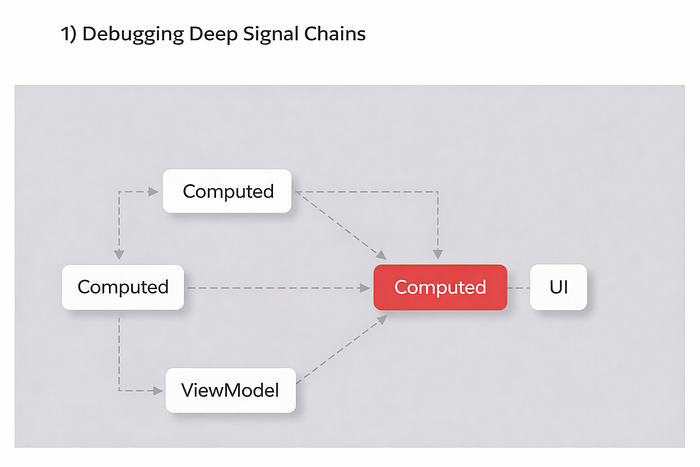
1) Debugging Deep Signal Chains
In small demos, Signals look simple:
count = signal(0);
doubleCount = computed(() => this.count() * 2);
But in production:
filters = signal<Filters>({...});
filteredData = computed(() => applyFilters(this.data(), this.filters()));
sortedData = computed(() => sort(this.filteredData()));
viewModel = computed(() => mapToVM(this.sortedData()));
Now imagine debugging:
- One filter changes
- Four computed values re-run
- UI re-renders
- But you don't know exactly which dependency triggered what
The issue wasn't Signals. It was deep chaining without boundaries.
Real Fix We Applied
✔ Maximum 2-level computed chain inside components ✔ Heavy transformations moved to services ✔ Temporary debug wrappers to log signal updates
That rule alone reduced confusion significantly.
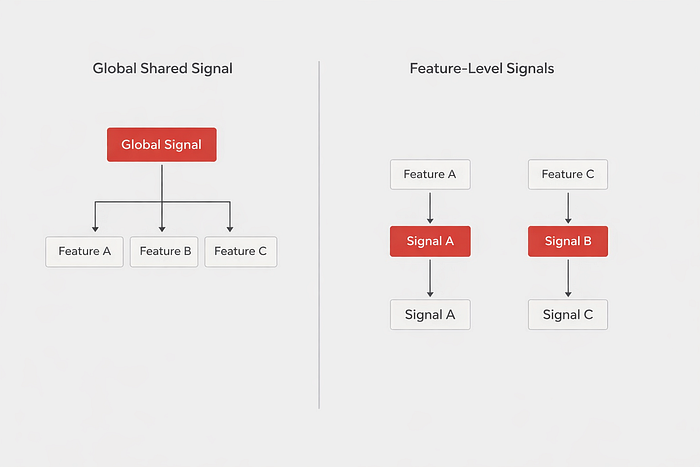
2) Hidden Coupling Between Features
👉 We introduced shared service-level signals.
It felt clean and easy to understand:
export const userState = signal<User | null>(null);But after weeks:
· One feature updated userState
· Another module re-rendered unexpectedly
· Cross-feature behavior became harder to trace
Signals made coupling silent.
What We Changed
✔ No global signals unless absolutely required ✔ Expose readonly signals only ✔ Always update via explicit methods
Example:
private _user = signal<User | null>(null);
readonly user = this._user.asReadonly();

updateUser(user: User) {
  this._user.set(user);
}
Now updates are intentional.
3) Performance Assumptions Didn't Always Hold
We assumed:
👉 Signals = automatic performance improvement.
Reality:
· Yes, fewer unnecessary checks in some cases
· But heavy computed logic ran more often than expected
· Large lists + expensive mapping caused micro-lags
👉 The mistake?
Putting heavy logic inside computed().
Real-World Adjustment
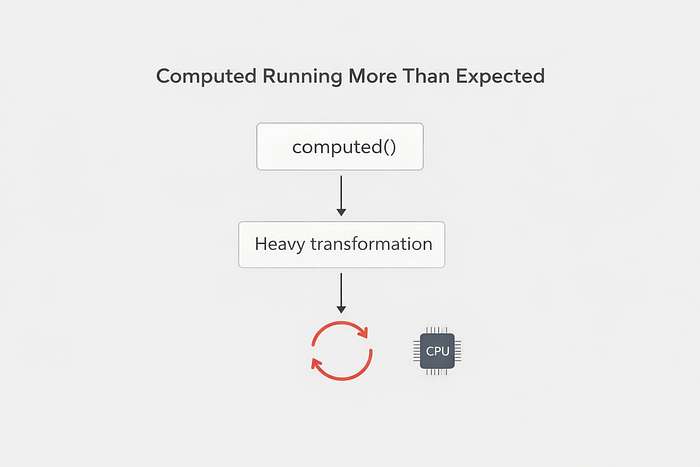
✔ Keep computed pure and lightweight ✔ Move heavy transforms outside reactive layer ✔ Use RxJS again for complex async flows
👉Important lesson:
Signals are great for synchronous UI state. RxJS is still stronger for async orchestration.
4) Team Confusion Increased
After migration, code reviews started sounding like this:
· Should this be a signal?
· Or observable?
· Or both?
· When do we use effect()?
The real problem wasn't Signals. It was lack of conventions.
Industry-Level Fix
We wrote internal guidelines:
👉 Use Signals for:
· Component state
· Derived sync UI state
· Simple reactive dependencies
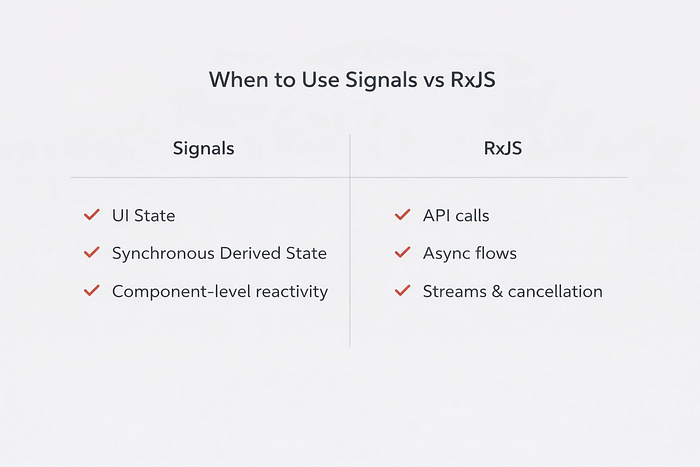
👉 Use RxJS for:
· API calls
· Complex async flows
· WebSockets
· Cancellation logic
Once boundaries were defined, confusion dropped.
5) SSR & Edge Cases
👉 In SSR setup, we noticed:
· Hydration timing mismatches
· Effects running earlier than expected
Nothing catastrophic — but subtle bugs.
✔ Deterministic initialization ✔ No side-effects inside computed ✔ Clear separation of server logic
👉 Signals don't break SSR. Unstructured architecture does.
My Final Honest Take
If you're working with Angular Signals in production, I've also shared some real-world challenges and mistakes:
→ Angular Signals Performance Benchmarks: What I Measured After 30 Days in Production.
After 3 months:
✔ Cleaner local state ✔ Simpler UI reactivity ✔ Better readability in small features
But:
❌ Not a replacement for RxJS everywhere ❌ Not automatically faster ❌ Not self-documenting without team conventions
Signals are powerful. But they require discipline.
So If you're using Angular Signals in production:
👉 Did performance meet expectations?
👉 Would you migrate again?
Real engineering is not about hype. It's about trade-offs.
Thank you for being a part of the community
Before you go:

👉 Be sure to clap and follow the writer ️👏️️
👉 CodeToDeploy Tech Community is live on Discord — Join now!
Disclosure: This post includes affiliate and partnership links.